
Improved Performance with Ongoing Feedback and Coaching – Part 1 of 3
A Strategic Framework for Providing Ongoing Feedback and Coaching in Skills-First Organizations

Welcome to our in-depth series, “Providing Ongoing Feedback and Coaching in Skills-First Organizations,” a pivotal chapter from the forthcoming book “Introduction to Skills-First Management.” In a world where organizational agility and continuous skill development are increasingly vital, traditional approaches to performance management are no longer enough. This multipart series will guide you—HR professionals, people leaders, and executives—through proven strategies and actionable insights for fostering a high-performance, feedback-rich culture that puts skills development at the center. Whether you're in the early stages of a skills-first journey or seeking to refine your current practices, this series will help you harness ongoing feedback and coaching to drive both employee growth and organizational excellence.
Introduction: The Evolution of Performance Management
In today's rapidly evolving workplace landscape, traditional performance management approaches are proving insufficient for organizations seeking sustained competitive advantage. The emergence of skills-first talent management represents a fundamental shift from static, role-based evaluation systems to dynamic, competency-focused development frameworks. Providing ongoing feedback and coaching is central to this transformation, serving as a cornerstone that connects individual skill development with organizational excellence.
Skills-first organizations recognize that nearly half of the global workforce's core skills will face disruption by 2027, according to the World Economic Forum. This striking projection underscores the pressing need for robust feedback and coaching systems that foster ongoing adaptation and growth. Unlike conventional annual review cycles, skills-first environments demand real-time, competency-focused dialogue that accelerates learning, enhances engagement, and drives measurable business outcomes.
Here are the main differences between the two as described by the Academy to Innovation HR.
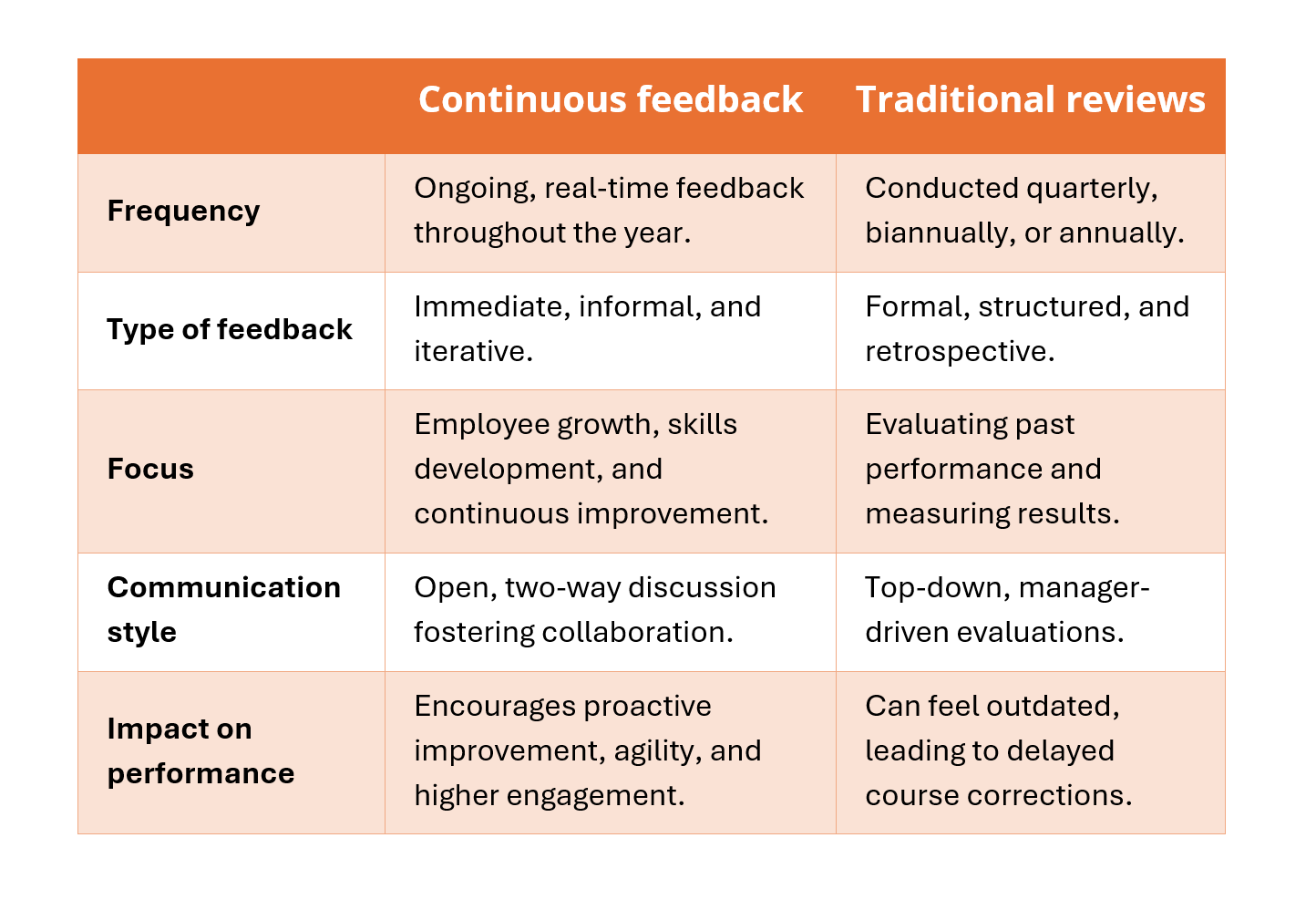
The strategic imperative for effective feedback and coaching extends beyond individual development to encompass organizational agility, innovation capacity, and talent retention. Research demonstrates that employees who receive constructive feedback in real-time report 84% higher engagement levels, while organizations with high feedback frequency achieve 21% increases in profitability. These compelling statistics highlight the transformative potential of effective feedback and coaching programs within skills-first frameworks.
The Critical Role of Feedback in Skills-First Leadership
Definition of Continuous Feedback and Coaching
Continuous feedback represents a fundamental departure from traditional performance evaluation models, embodying an ongoing dialogue between leaders and team members focused on skill development, goal achievement, and behavioral enhancement. In skills-first contexts, this approach transcends simple performance assessment to become a strategic enabler of competency acquisition and application. Continuous feedback encompasses real-time observations, structured conversations, and systematic documentation of skill progression, creating a comprehensive developmental ecosystem.
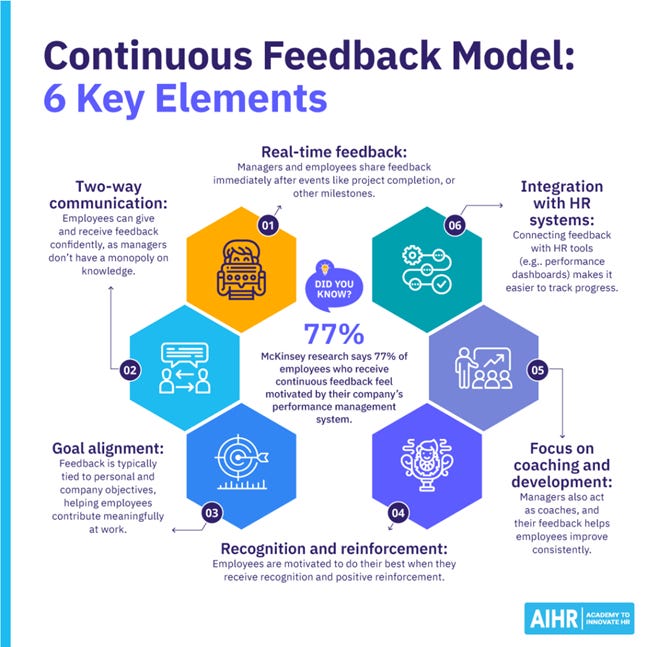
Coaching, while closely related to feedback, serves a distinct yet complementary function within skills-first environments. Coaching involves structured, goal-oriented conversations designed to unlock individual potential through questioning, exploration, and collaborative problem-solving. The coaching process emphasizes employee agency and self-discovery, fostering deeper learning and sustainable behavioral change. In skills-first organizations, coaching focuses on addressing competency gaps, enhancing skills, and navigating career pathways to support individual growth.
The integration of continuous feedback and coaching accelerates skill development while maintaining performance standards. This dual approach ensures that employees receive both directional guidance through feedback and developmental support through coaching, maximizing their capacity to acquire and apply new competencies effectively.
Why Skills-First Contexts Require Ongoing Dialogue
Skills-first talent management systems fundamentally alter the relationship between work, performance, and development. Unlike traditional job-based structures where roles remain relatively static, skills-first environments are characterized by fluid competency requirements, evolving project demands, and continuous learning expectations. This dynamic context necessitates ongoing dialogue to ensure alignment between individual skill development and organizational needs.
The accelerated pace of skill obsolescence in modern workplaces creates an imperative for frequent check-ins and course corrections. The World Economic Forum's projection that 50% of workers will require reskilling by 2027 highlights the inadequacy of annual or quarterly feedback cycles.. Skills-first organizations must maintain continuous awareness of competency gaps, emerging skill requirements, and individual development progress to remain competitive and adaptive.
Furthermore, skills-first approaches emphasize competency application rather than credential acquisition. This shift requires ongoing observation and feedback to ensure that newly developed skills translate into improved performance and value creation. Regular dialogue enables leaders to assess skill transfer effectiveness, identify application barriers, and provide targeted support for competency integration.
The Difference Between Feedback, Coaching, and Evaluation
Understanding the distinctions between feedback, coaching, and evaluation is crucial for implementing effective skills-first performance management systems. Each serves unique purposes and employs different methodologies, yet all contribute to the comprehensive development of employee capabilities.
Feedback primarily focuses on providing specific, actionable information about observed behaviors, performance outcomes, or skill demonstrations. In skills-first contexts, feedback targets competency-related behaviors and their impact on individual and organizational objectives. Effective feedback is timely, objective, and directly linked to skill development goals. The Situation-Behavior-Impact (SBI) model exemplifies structured feedback approaches that enhance clarity and reduce defensiveness while promoting skill-focused dialogue.
Coaching represents a more exploratory and developmental approach that emphasizes questioning, reflection, and collaborative problem-solving. The GROW (Goal, Reality, Options, Will) model demonstrates how coaching conversations can systematically guide individuals through skill development challenges and opportunities. In skills-first environments, coaching focuses on competency acquisition strategies, application techniques, and career development pathways aligned with organizational needs.
Evaluation, by contrast, involves formal assessment and rating of performance against predetermined standards or expectations. While evaluation remains important for decision-making purposes, skills-first organizations often de-emphasize traditional rating systems in favor of competency-based assessments that track skill development and effectiveness in application. Modern evaluation methods in skills-first contexts incorporate feedback and coaching insights to form comprehensive development profiles, rather than static performance snapshots.
Creating a Feedback-Rich Environment
Normalizing Feedback as Part of Organizational Culture
Establishing feedback as a natural and expected component of daily work interactions requires intentional cultural transformation within skills-first organizations. This transformation begins with leadership modeling and extends through systematic process redesign that embeds feedback opportunities throughout the employee experience. Organizations must move beyond viewing feedback as an annual event to embracing it as a continuous development tool that enhances skill acquisition and performance optimization.
Cultural normalization of feedback requires addressing common organizational barriers, including fear of criticism, time constraints, and inadequate manager preparation. Research indicates that 69% of managers feel uncomfortable providing feedback to employees, often leading to avoidance or delayed conversations that reduce effectiveness. Skills-first organizations must invest in manager development, communication training, and structural support systems that enable the delivery of confident and competent feedback.
The process of normalization also involves reframing feedback from a punitive or corrective mechanism to a developmental opportunity aligned with skill enhancement goals. When employees understand that feedback directly supports their competency development and career advancement within the organization's skills-first framework, resistance typically diminishes while engagement increases. This reframing requires consistent messaging, visible leadership commitment, and tangible connections between the quality of feedback and individual growth outcomes.
Creating feedback rituals and routines further supports cultural normalization by establishing predictable opportunities for skill-focused dialogue. These might include weekly skill reflection sessions, project-based competency debriefs, or peer feedback exchanges integrated into collaborative work processes. When feedback becomes a routine expectation rather than an exceptional event, both providers and recipients develop greater comfort and competence with the process.
Psychological Safety and Open Communication
Psychological safety serves as the foundational prerequisite for effective feedback and coaching in skills-first environments. Defined by Harvard Business School Professor Amy Edmondson as "a felt permission for candor," psychological safety enables individuals to engage authentically in developmental conversations without fear of negative repercussions. Organizations with high psychological safety are 3.5 times more likely to achieve high performance, demonstrating the business impact of creating supportive feedback environments.
Building psychological safety requires deliberate leadership actions that demonstrate vulnerability, acknowledge mistakes, and celebrate learning from failures. Leaders in skills-first organizations must model the behaviors they expect from team members, including actively seeking feedback, admitting knowledge gaps, and openly discussing skill development needs. This modeling creates permission for others to engage similarly, fostering an environment where skill-focused dialogue becomes natural and productive.
Trust building represents another critical component of psychological safety within feedback-rich environments. Research shows that when feedback is delivered consistently and skillfully, managers establish and strengthen trust relationships that enhance future developmental conversations. This trust enables more open communication about skill gaps, learning preferences, and career aspirations, facilitating more targeted and effective coaching interventions.
Communication norms and expectations also significantly contribute to psychological safety. Organizations must establish clear guidelines regarding feedback delivery, response expectations, and conflict resolution processes that protect individuals while promoting open and honest dialogue. These norms should emphasize respect, a growth-oriented approach, and mutual accountability for creating positive developmental experiences.
Encouraging Peer and Multi-Directional Feedback
Skills-first organizations benefit significantly from expanding feedback beyond traditional hierarchical relationships to include peer, cross-functional, and upward feedback exchanges. Multi-directional feedback provides more comprehensive perspectives on skill demonstration and application, offering richer developmental insights than single-source evaluations. Research shows that informal coaching from supervisors and peers can significantly improve employee performance, especially when it is backed by transformational leadership and organizational support.
Peer feedback systems enable skills-based organizations to leverage distributed expertise and diverse perspectives, leading to improved learning outcomes. When employees receive input from colleagues who observe their work from different vantage points, they gain valuable insights into the application of their competencies across various contexts and situations. This multi-perspective approach is particularly valuable in skills-first environments where competency requirements may vary across projects, teams, or functional areas.
Implementing effective peer feedback requires careful design and support to ensure quality and consistency. Organizations must provide training on feedback delivery techniques, establish clear expectations for participation, and create structured processes that facilitate meaningful exchanges. The SBI (Situation-Behavior-Impact) model proves particularly valuable for peer feedback as it promotes objectivity and reduces personal bias in developmental conversations.
Cross-functional feedback opportunities further enhance skill development by exposing employees to diverse perspectives and competency requirements across organizational boundaries. When individuals receive input from colleagues in different departments or functions, they develop a broader understanding of how their skills contribute to organizational success and where additional development might create value. This expanded awareness supports more strategic skill development decisions and enhanced organizational agility.
Upward feedback, where employees provide developmental input to their managers and leaders, creates additional learning opportunities while promoting accountability throughout the organization. When managers solicit feedback for themselves, they receive valuable insights, build trust, and reinforce a culture of feedback. In skills-first contexts, upward feedback can focus on leadership competencies, coaching effectiveness, and support quality, creating continuous improvement loops that enhance the overall feedback culture.
As we’ve explored, a strong foundation of continuous feedback and a supportive environment are crucial to building a culture where skills truly come first. In our next installment, we’ll move from theory to practice—diving into the leading feedback models and coaching techniques that enable real transformation. Stay tuned for part two, where you’ll discover step-by-step guidance on delivering powerful feedback and building leadership habits that accelerate skills growth, setting the stage for real-world impact and success stories you’ll see in part three.
Notes
https://www.aihr.com/blog/continuous-feedback/
https://mitratech.com/resource-hub/blog/the-power-of-continuous-feedback-for-employee-growth/
https://www.coach4growth.com/coaching-skills/coaching-models/grow-model/
https://worldofwork.io/2019/08/the-grow-coaching-model/
https://www.upskillist.pro/blog/what-is-the-grow-model-in-coaching
https://wp.nyu.edu/coaching/tools/grow-model/
https://www.muchskills.com/blog/transform-performance-management-with-a-skills-based-approach
https://nestorup.com/blog/skills-first-a-new-framework-for-talent-management/
https://www.betterworks.com/magazine/building-skills-into-your-performance-management-program/
https://www.pluralsight.com/resources/blog/business-and-leadership/skills-talent-management-strategy
https://www.phenom.com/blog/performance-management-skills-based-organization
https://worldofwork.io/2019/07/sbi-feedback-model/
https://fourweekmba.com/sbi-feedback-model/
https://fellow.app/blog/feedback/sbi-feedback-model/
https://www.betterup.com/blog/grow-model-for-coaching
https://blog.avilar.com/2025/03/26/7-keys-to-competency-based-performance-management/
https://www.leaderfactor.com/learn/components-of-psychological-safety
https://aaronhall.com/what-are-effective-strategies-for-managing-employee-resistance-to-feedback/
https://www.prialto.com/blog/want-employees-to-embrace-feedback-improve-psychological-safety
https://aaronhall.com/what-are-effective-strategies-for-handling-employee-resistance-to-feedback/
https://www.linkedin.com/advice/0/how-can-you-use-feedback-create-culture-oqkee
https://journals.plos.org/plosone/article?id=10.1371%2Fjournal.pone.0320577
https://pmc.ncbi.nlm.nih.gov/articles/PMC11960931/
https://chronus.com/blog/types-of-coaching
https://www.coaching-focus.com/blog/formal-and-informal-coaching
https://www.getbridge.com/blog/lms/integrate-hris-lms-learning-development/
https://matchr.com/hris-software-employee-performance-management/
https://www.advisory.com/daily-briefing/2015/11/12/what-to-do-when-your-employees-resist-feedback
https://careerminds.com/blog/sbi-model-situation-behavior-impact
https://breezy.hr/blog/sbi-feedback-model
https://engagedly.com/blog/importance-of-sbi-when-giving-feedback-in-workplace/
https://coachingfederation.org/blog/measuring-the-roi-of-coaching-a-pragmatic-approach-for-coaches/
https://simply.coach/blog/coaching-return-on-investment-measurement/
https://insight7.io/how-to-deliver-coaching-feedback-without-resistance/
https://socpub.com/articles/how-effectively-manage-employees-resistant-feedback-18019
https://lattice.com/articles/everything-you-need-to-know-about-the-grow-coaching-model
https://www.cultureamp.com/blog/grow-model-coaching
https://skillstx.com/key-metrics-skills-based-organisations/
https://www.udemy.com/course/skills-first-revolution-transforming-talent-strategies/
https://hrdelivered.com/hris/learning-management-system/
https://www.gyrus.com/blogs/hris-integration-guide/
https://www.coachhub.com/blog/defining-metrics-and-kpis-to-measure-the-effectiveness-of-coaching
https://www.coachhub.com/en/blog/defining-metrics-and-kpis-to-measure-the-effectiveness-of-coaching
https://sustaincase.com/case-study-how-maybank-promotes-work-life-integration-among-employees/
https://www.harvardbusiness.org/wp-content/uploads/2021/05/HBP_CL_Client-Story_Maybank_April2021.pdf
https://symtrain.ai/everything-you-need-to-know-about-lms-hris-and-the-future-of/
https://insight7.io/5-ways-to-measure-the-impact-of-coaching-interventions/
https://aaronhall.com/how-do-i-manage-an-employee-resistant-to-both-feedback-and-coaching/
https://www.linkedin.com/pulse/feedback-resistance-what-why-occurs-how-deal-shafayetul-islam
https://coachingfederation.org/blog/enhancing-coaching-on-digital-platforms/
https://dialzara.com/blog/how-ai-improves-employee-feedback-systems
https://www.thinkific.com/blog/best-online-coaching-platforms/
https://www.hrtechpartner.com/en/post/ai-powered-feedback-a-game-changer-for-employee-engagement
https://www.advantageclub.ai/blog/ai-employee-feedback-recognition-programs
https://safetyculture.com/topics/training-effectiveness/training-metrics/
https://www.linkedin.com/pulse/roi-business-coaching-real-numbers-results--yxoic
https://www.humentic.com/articles/measuring-the-impact-of-coaching-training-metrics-for-success
https://www.linkedin.com/pulse/roi-business-coaching-measuring-success-beyond-bottom-line-imooc
https://coachingoutofthebox.com/coaching-resources/articles/the-roi-of-corporate-coaching/
https://www.kaizen.consulting/insights/coaching-roi-business-coaching-worth
https://upcoach.com/coaching-kpis/
https://coactive.com/blog/roi-and-coaching/
https://www.valamis.com/blog/learning-metrics
https://hbr.org/2009/04/feedback-that-works
https://www.gallup.com/workplace/349484/state-of-the-global-workplace.aspx
https//www.youtube.com/watch?v=Xm1vFnjr7Vw
https//www.youtube.com/watch?v=ihvrlzMb-rk
https//www.youtube.com/watch?v=x-x1PiSlSTU